
 By James John
For decades, traditional fashion etiquette treated the blending of gold and silver jewelry as an unpardonable styling error. Wardrobes operated under rigid, unspoken commandments: warm metals belonged exclusively with warm tones, cool tones demanded icy platinum or sterling silver, and mixing the two signaled either haste or carelessness. Jewelry boxes were effectively partitioned into two opposing camps. You were either a gold person or a silver person, and your watch, rings, earrings, and necklace chains were expected to march in strict, monochromatic lockstep.
That outdated aesthetic orthodoxy has dissolved. Contemporary styling recognizes that matching every metallic accent feels stiff, flat, and overly deliberate. Far from clashing, pairing the sun-drenched warmth of yellow gold with the crisp, modern chill of silver creates visual depth, dimensional texture, and an effortless sense of curation. When combined with intentionality, mixed metals look modern, personal, and collected over time rather than purchased off a single department-store display tray.
Mastering the technique, however, requires more than haphazardly throwing on whatever rings happen to be clean. It is an exercise in visual balance, thoughtful placement, and disciplined curation.
Anchor the Combination with a Bridge Piece
The simplest way to make mixed metals look deliberate rather than accidental is to introduce a bridge piece—a single item of jewelry that naturally incorporates both gold and silver within its own construction.
A bridge piece serves as an aesthetic diplomat, establishing a shared color language for the rest of your accessories. It immediately signals to the eye that the contrast across your wrists, neck, or fingers is an intentional design choice.
Classic bridge pieces include:
-
Two-tone luxury watches: Timepieces that feature stainless steel bracelets with yellow gold center links, bezels, or crowns are the ultimate grounding anchor. A two-tone watch effortlessly grants permission to wear a chunky gold signet ring on one hand and a sleek silver cuff on the other.
-
Intertwined rolling rings: Tri-color and two-tone bands composed of interlocking loops in distinct metals unify adjacent rings worn on neighboring fingers.
-
Mixed-link chains: Necklaces or bracelets that alternate between sterling silver paperclip links and yellow gold curb links establish immediate harmony right at the center of your collarbone or wrist.
Once a bridge piece is in play, any standalone gold or silver accessories you add will feel connected to a cohesive narrative rather than competing for dominance.
Establish a Dominant Base and an Accent Ratio
When combining contrasting tones, equal division is rarely the most flattering approach. Splitting your jewelry fifty-fifty between gold and silver can create visual hesitation, leaving the viewer unsure of the intended focal point.
Instead, style your pieces using an asymmetrical ratio—ideally 70/30 or 60/40. Select one metal to serve as the dominant anchor of your look, then use the contrasting metal as a deliberate, punctuation-like accent.
Your choice of dominant metal often depends on your outfit or personal undertones:
-
Leaning into gold: If you are wearing rich autumn neutrals, camel outerwear, olive linen, or warm ivory knits, make yellow or rose gold your primary foundation. Layer multiple gold chains or stack gold rings, then weave in a slender silver choker or a pair of sculptural silver huggie earrings to inject unexpected coolness.
-
Leading with silver: Against stark black tailoring, crisp charcoal wool, optic white cotton, or slate blue, allow silver or platinum to dominate. A heavy silver curb chain paired with a vintage silver cuff sets a sleek, industrial tone; adding a slender gold pinky ring or delicate gold pendant softens the look and introduces subtle warmth.
Maintaining a distinct primary metal ensures that your ensemble feels grounded, while the secondary metal provides the necessary contrast that keeps the arrangement visually engaging.
Cluster and Layer in Close Proximity
A common mistake when experimenting with mixed metals is isolating tones across opposite sides of the body—wearing exclusively gold pieces on the right hand and ear while reserving silver solely for the left wrist and neckline. This physical separation disrupts visual flow and makes the outfit appear divided down the middle.
Mixed metals look their best when brought into immediate, close proximity. Layering contrasting tones within the same zone creates dynamic interplay and highlights the unique luster of each material.
Curating the Neckline
When layering necklaces, stagger lengths and vary chain gauges to give each piece space to breathe:
-
Place a delicate, fourteen-karat yellow gold rope chain directly against the collarbone at sixteen inches.
-
Follow with an eighteen-inch sterling silver box or figaro chain carrying a minimalist pendant.
-
Finish with a twenty-inch textured gold chain that rests lower on the chest.
Varying the drop length prevents tangling while allowing the warm and cool metals to frame the face in alternating, rhythmic ribbons.
Stacking Rings and Wrists
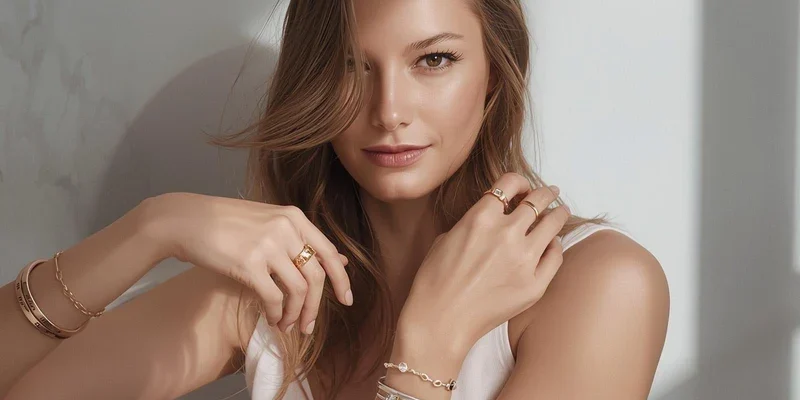
Hands and wrists offer the most forgiving canvas for high-contrast styling. Rather than dedicating one hand to silver and the other to gold, stack both metals on the same finger or across adjacent knuckles. Slide a slender sterling silver eternity band between two textured yellow gold stacking rings. On the wrist, pair a structured silver wire cuff right alongside a fluid gold tennis bracelet. The physical contact between the two contrasting surfaces turns the friction of opposing colors into an asset.
Unify Through Consistent Style, Scale, and Texture
While you are breaking the rule of matching colors, you should maintain consistency across other design dimensions. If metal color, jewelry style, physical scale, and surface finish are all disparate at once, the result quickly looks chaotic.
To keep a mixed-metal look sophisticated, unify your pieces along shared design characteristics:
-
Match the aesthetic genre: Pair modern, architectural, high-polish silver pieces with equally clean, geometric gold items. Conversely, if you favor bohemian, antique, or hand-forged jewelry, combine oxidized sterling silver with warm, hammered eighteen-karat gold. The shared artisanal craftsmanship ties the pieces together regardless of color.
-
Balance visual weight: Pair delicate, whisper-thin chains with other fine chains; do not drown a micro-gauge gold wire necklace beneath a massive, two-pound silver biker chain unless a dramatic high-low contrast is explicitly your goal. Matching the scale creates symmetry that anchors the dual-tone palette.
-
Use gemstones as neutral buffers: Diamonds, white sapphires, luminous pearls, and clear quartz sit comfortably between gold and silver. A pearl necklace featuring a yellow gold clasp or a bezel-set diamond ring set in platinum with a yellow gold shank bridges opposing metals naturally by introducing a neutral, light-catching element.
Integrate Accessories and Hardware into the Broader Silhouette
Jewelry does not exist in a vacuum; it interacts directly with the metallic hardware embedded throughout your wardrobe. Handbag clasps, belt buckles, trench coat buttons, boot zippers, and eyewear frames all contribute to your overall metallic presence.
Rather than agonizing over matching your brass handbag chain to your sterling silver earrings, embrace the mixed-metal philosophy from head to toe. If your favorite leather belt features an antiqued silver buckle, wear a yellow gold watch alongside a sterling silver ring stack. The presence of both metals in your jewelry ensures that no matter what hardware your shoes, bag, or outerwear carry, your accessories will tie the entire silhouette together seamlessly.
Moving past monochrome jewelry is ultimately an exercise in personal expression. By anchoring your collection with a thoughtful bridge piece, leaning into purposeful proportional ratios, and clustering contrasting tones close together, you trade rigid, dated styling rules for a fluid, sophisticated aesthetic that elevates everything you wear.
What is your reaction?
Excited
0
Happy
0
In Love
0
Not Sure
0
Silly
0