 By James John
The parasol at a beach club and the one on a condominium balcony look similar in a catalogue and are built to completely different standards. One is opened and closed twice a day, three hundred and sixty days a year, in salt air. The other is used at weekends. Buying an outdoor parasol singapore conditions will not destroy in eighteen months means matching the build to how often it will actually be worked.
Domestic and Commercial Grades Differ Materially
A residential parasol uses lighter ribs, a simpler mechanism and a canopy sized for a family table. A commercial unit has heavier gauge framing, reinforced rib joints, a mechanism rated for daily operation, and a canopy that can be replaced on its own. The price difference reflects real engineering rather than branding. Putting a residential unit into a cafe terrace is the most common false economy in this category, and it usually announces itself when a rib snaps during the second monsoon season.
Sizing for the Space
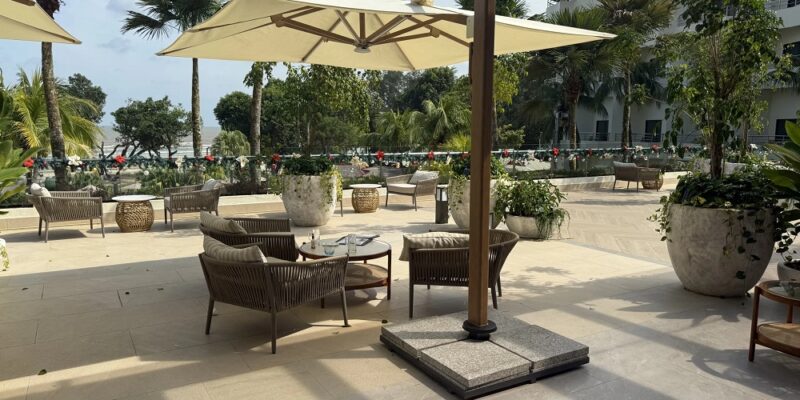
Measure the table and add roughly a metre on each side to allow for seated diners and for the sun being at an angle most of the day. Two and a half metres covers a small four seat table, three metres a six-seater, and larger canopies need proportionately more base weight or a fixed mounting. For a terrace with several tables, a set of matched smaller parasols is usually more practical than one large one, since they can be rearranged and a single failure does not shade the whole area.
Centre Pole Versus Cantilever
Centre pole units are more stable, cheaper and perfectly suited to dining, where a pole through the table hole is no inconvenience. Cantilever designs suspend the canopy from a side post, leaving the space underneath clear, which suits lounge seating, daybeds and pool decks. They need substantially heavier bases and are more exposed to wind. For commercial settings where staff move furniture constantly, centre pole units generally survive better.
Bases and Fixing
Most parasol failures are base failures. Freestanding bases must be genuinely heavy, and the weight required rises sharply with canopy size and faster still for cantilevers. Better solutions exist in permanent locations, a plate bolted into a concrete slab, or a ground sleeve that the pole drops into and lifts out of for storage. On roof terraces and elevated decks, fixed mounting is the only responsible approach, because an airborne parasol from height is a serious hazard.
Fabric That Survives the Climate
Solution-dyed acrylic keeps its colour far longer than printed fabric because pigment is locked into the fibre, and under this level of UV that difference is visible within a year. Look for a stated UV rating, mould and mildew resistance, and washability, since humidity encourages growth in any fabric that is stored damp. A vented crown lets hot air escape and lets a gust pass through instead of lifting the canopy, which is a structural feature rather than a styling detail.
Frames and Coastal Exposure
Aluminium with anodised or quality powder-coated finish is the default and resists corrosion well. Steel frames are stronger and heavier but must be galvanised and properly coated, or salt-laden air near the coast will produce rust streaks within a season. Timber is attractive, weathers grey and needs oiling annually to look deliberate. Check the rib joints and the crown fitting rather than the pole, since that is where stress concentrates and where cheap units fail.
Commercial Operations and Branding
Food and beverage operators get a second benefit from parasols, visible frontage. Printed canopies carrying a name or logo are inexpensive relative to other signage and can be replaced as branding changes. What matters operationally is consistency across the set, availability of matching replacement covers years later, and a mechanism the staff can work quickly at opening and closing. Ask about lead times for replacement canopies before committing to a large order of any outdoor parasol design.
Storage Between Uses
Where parasols come down at the end of each day, storage decides how long they last. A cover slipped over the closed canopy keeps dust and bird droppings off and is worth the small cost. Store units upright and dry rather than lying on a wet floor, since water sitting in the folds is exactly how mould establishes. Ground sleeves make daily removal quick, and a dedicated rack or store near the terrace means the routine actually gets followed. Where staff have to carry parasols across a site each evening, they eventually stop, and the units suffer accordingly.
Wind Discipline and Staff Routine
No parasol of any grade survives being left open in a squall. Commercial premises need a written rule about who closes them and when, because the decision cannot depend on whoever happens to notice the sky darkening. Domestic users should close before leaving rather than after the first gust. Where an area is genuinely exposed, a fixed shade structure is a better investment than a larger parasol.
Care and Replacement
Rinse canopies periodically, deal with bird droppings promptly since they both stain and degrade the fabric, and allow everything to dry before closing for extended storage. Lubricate the crank and check rib joints annually. A well-chosen outdoor parasol singapore businesses and households buy should reach the point where the canopy needs replacing while the frame is still entirely sound, which is exactly the outcome that separates a commercial-grade unit from a bargain.